Uncategorized

social media marketing helps businesses grow
Uncategorized

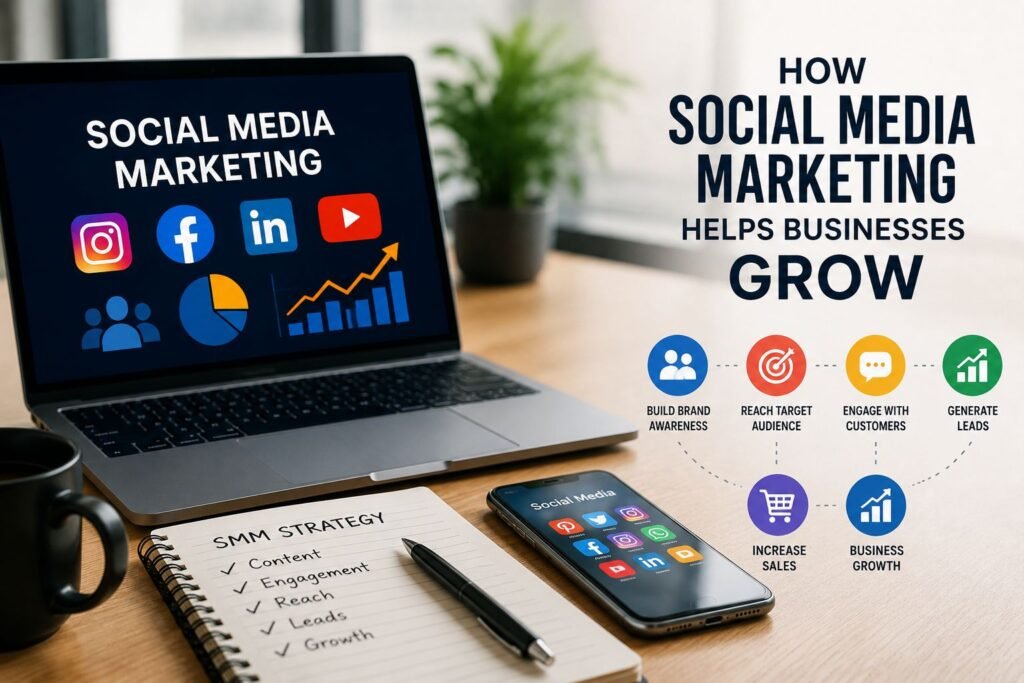
How Social Media Marketing Helps Businesses Grow

Introduction Social Media Marketing has become one of the most powerful tools for modern businesses. Platforms such as Instagram, Facebook, LinkedIn, YouTube, and other social networks have changed the way businesses communicate with customers. What started mainly as a way for people to connect and share content has now become an important part of business marketing, branding, customer service, and sales. Today, customers often discover brands through social media before visiting a website or making a purchase. They may watch a product video, read comments, check customer reviews, explore a company’s profile, or send a direct message before deciding whether to buy. This makes social media an important part of the customer journey. Social Media Marketing, commonly called SMM, is the process of using social media platforms to promote a business, communicate with its target audience, build brand awareness, generate leads, increase website traffic, and support sales. However, successful social media marketing is more than simply posting pictures every day. Businesses need a clear strategy, relevant content, consistent communication, audience understanding, and regular performance analysis. When used effectively, social media can help businesses build strong relationships with customers and create long-term growth opportunities. What Is Social Media Marketing? Social Media Marketing is a digital marketing method that uses social media platforms to promote products, services, brands, or businesses. It includes activities such as creating content, publishing posts, producing videos, responding to comments, communicating through direct messages, running advertisements, collaborating with creators, and analyzing performance. Social media marketing can be divided into two major areas: organic social media marketing and paid social media marketing. Organic marketing focuses on content and engagement without directly paying for advertising. Paid social media marketing involves running advertisements to reach specific audiences. A strong strategy often combines both approaches. Why Social Media Marketing Is Important for Businesses The importance of social media comes from the large amount of time people spend on digital platforms. Customers use social media not only for entertainment but also to discover businesses, learn about products, research services, follow brands, and make purchasing decisions. If a business does not have a strong social media presence, it may miss opportunities to connect with potential customers. Social media gives businesses a platform to communicate directly with their audience and present their brand in a more personal and engaging way. Social Media Marketing Building Brand Awareness One of the biggest benefits of social media marketing is increased brand awareness. A business can consistently share its products, services, values, expertise, and visual identity with its target audience. For example, a skincare brand can share educational posts about skincare routines, product demonstrations, customer experiences, and useful tips. Over time, people may become familiar with the brand even before they are ready to purchase. Consistent exposure helps businesses remain recognizable. Brand awareness is particularly important for new businesses because customers cannot choose a brand they do not know. Reaching the Right Audience Social media platforms provide businesses with opportunities to reach specific audiences. Businesses can create content based on their target customer’s interests, needs, age group, location, profession, lifestyle, and online behavior. Paid social media advertising provides even more targeting possibilities. For example, a business selling professional digital marketing courses could create campaigns aimed at people interested in digital marketing, business, entrepreneurship, education, or career development. Reaching the right people is more valuable than simply reaching a large number of people. A smaller audience that is genuinely interested in a business can often be more valuable than a large audience with no interest in its products or services. Increasing Customer Engagement Social media is different from many traditional marketing channels because it allows two-way communication. Businesses can communicate directly with customers through comments, direct messages, polls, questions, live sessions, and other interactive content. Customers can also provide feedback and ask questions. For example, a restaurant can ask its followers which new dish they would like to see on the menu. A clothing brand can use polls to understand customer preferences about colors or styles. This interaction makes customers feel involved and can strengthen their connection with the brand. Building Trust and Credibility Customers are more likely to trust businesses that communicate clearly and consistently. A professional social media presence can demonstrate a company’s expertise, products, customer experiences, and personality. Businesses can share educational content, behind-the-scenes activities, customer testimonials, case studies, team introductions, and useful information. For service-based businesses, educational content can be particularly valuable. For example, a digital marketer can share practical SEO tips, social media strategies, advertising insights, and content marketing ideas. This type of content can demonstrate knowledge and build credibility among potential clients. Generating Leads Social media can also become an effective lead generation channel. Businesses can encourage interested users to contact them, visit their website, sign up for a service, download a resource, or fill out a form. For example, a digital marketing agency could publish a post explaining common advertising mistakes and invite interested business owners to contact the company for more information. Paid campaigns can also be designed specifically for lead generation. The important point is that businesses should make the next step clear. A strong call to action can guide interested users toward taking action. Examples include: Contact us today. Visit our website. Book a consultation. Learn more. Send us a message. Get started. Supporting Sales Social media can directly and indirectly contribute to sales. Businesses can showcase products, demonstrate how they work, answer customer questions, provide offers, and guide users toward purchase. Visual content is particularly effective for products that depend on appearance. For example, a fashion brand can use high-quality images and videos to demonstrate products. A restaurant can use attractive food photography and short videos to encourage customers to place orders. However, businesses should avoid making every social media post a direct sales pitch. A healthy content strategy combines promotional content with educational, entertaining, and engaging content. The Importance of Content Strategy A successful social media presence requires a content strategy. Instead of posting random content, businesses
SEO vs Paid Advertising comparison for business growth
Uncategorized

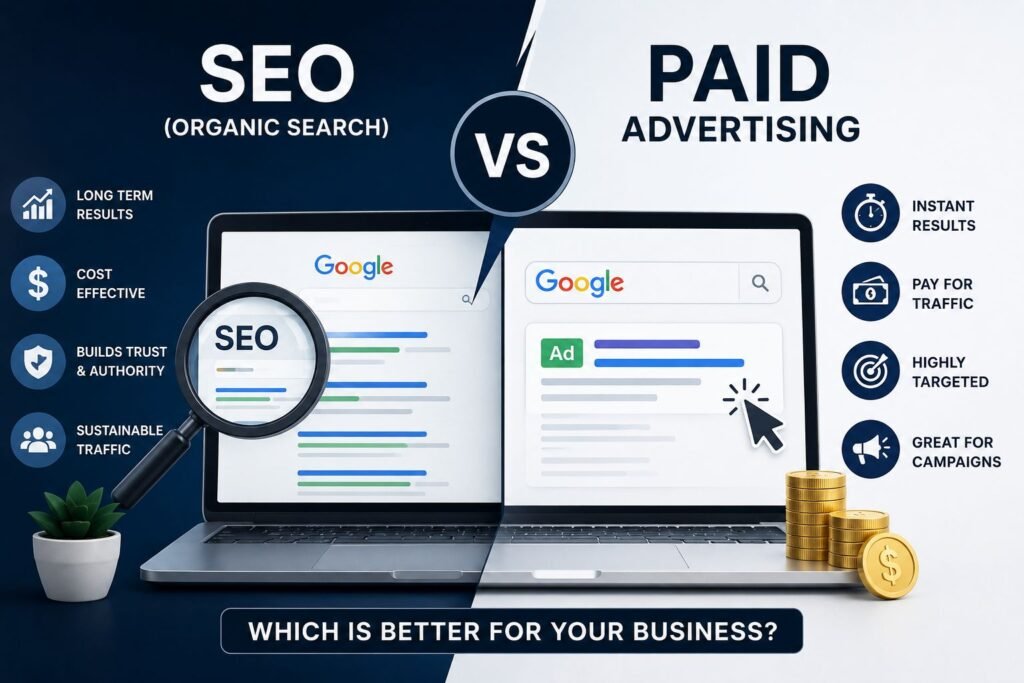
SEO vs Paid Advertising: Which Is Better for Your Business?

Introduction SEO vs Paid Advertising is an important decision for businesses looking to attract customers and build a successful online presence. In today’s digital-first business environment, having an online presence is essential for attracting customers and building a successful brand. When people need a product or service, one of the first things they often do is search online. They may use Google to find information, compare businesses, read reviews, or make a purchase. This creates a major opportunity for businesses to reach potential customers through digital marketing. Two of the most important strategies for increasing online visibility are Search Engine Optimization (SEO) and Paid Advertising. Both strategies can help businesses attract website visitors, generate leads, increase sales, and grow their online presence. However, they work in very different ways. SEO focuses on improving a website so that it can appear naturally in search engine results. Paid advertising, on the other hand, involves paying platforms such as Google to display advertisements to selected audiences. The question many business owners ask is: Which is better—SEO or paid advertising? There is no single answer. The right choice depends on the business, goals, budget, target audience, competition, and desired timeline. Understanding the differences between SEO and paid advertising can help businesses make better marketing decisions. SEO vs Paid Advertising What Is SEO? Search Engine Optimization, commonly known as SEO, is the process of improving a website and its content to increase its visibility in organic search engine results. When users search for something on Google, the search engine analyzes many factors to determine which pages are most relevant and useful for that search. SEO helps businesses improve their chances of appearing in these results. For example, imagine a person searches for “best digital marketing services for small businesses.” A digital marketing professional who has optimized their website and created useful content around relevant topics may have an opportunity to appear in the search results. SEO generally involves several areas, including keyword research, content optimization, technical SEO, website structure, internal linking, page speed, mobile usability, and building website authority. Unlike paid advertising, businesses do not pay Google for every organic click. However, SEO requires time, knowledge, consistency, and ongoing optimization. What Is Paid Advertising? Paid advertising is a digital marketing method where businesses pay advertising platforms to promote their products or services. One of the most popular forms is Google Ads, where businesses can create advertisements that may appear when users search for relevant keywords. For example, a company offering website design services could create an advertisement targeting searches related to website design. When a potential customer searches for a relevant term, the advertisement may appear in a prominent position. Businesses can also use paid advertising on social media platforms such as Facebook and Instagram. These campaigns can be used for brand awareness, website traffic, lead generation, product promotion, and sales. Paid advertising can provide faster visibility compared with SEO, but businesses generally need to continue spending money to maintain that paid traffic. SEO vs Paid Advertising SEO vs Paid Advertising: The Main Difference The biggest difference between SEO and paid advertising is how visibility is achieved. With SEO, a business works to earn visibility through organic search results. With paid advertising, a business pays for advertising space. SEO is generally considered a long-term strategy, while paid advertising can provide faster short-term visibility. For example, a new website may take time to build organic search visibility through SEO. A paid advertising campaign, however, can potentially start bringing targeted visitors soon after it is launched. Both strategies have advantages and limitations, which is why businesses should evaluate them based on their specific goals. SEO vs Paid Advertising The Benefits of SEO Long-Term Visibility One of the major advantages of SEO is its potential to generate long-term visibility. A high-quality article or well-optimized website page can continue attracting organic visitors after it has been published. This makes SEO valuable for businesses interested in sustainable online growth. However, rankings are not permanent. Search engine algorithms, competitors, and user behavior can change, so businesses need to continue maintaining and improving their SEO. Organic Traffic SEO can help businesses attract organic traffic without paying for every individual click. When a website ranks for relevant keywords, users can discover it naturally through search engines. This can be particularly valuable for businesses that regularly receive search traffic from customers looking for their products or services. Builds Credibility Users often view businesses that appear prominently in search results as established or trustworthy, although rankings alone do not guarantee credibility. High-quality content can strengthen this effect by providing useful information and demonstrating expertise. For example, a digital marketing website that regularly publishes informative articles about SEO, social media, and advertising can establish itself as a knowledgeable resource. Supports Content Marketing SEO and content marketing work closely together. Businesses can create blog posts, guides, FAQs, case studies, and other resources based on topics their target customers are searching for. This content can attract organic visitors while also educating potential customers. Can Be Cost-Effective Over Time SEO requires investment in strategy, content, tools, technical improvements, and expertise. However, once a website gains strong organic visibility, it can potentially generate significant traffic without paying for every click. This makes SEO attractive for businesses focused on long-term growth. SEO vs Paid Advertising The Limitations of SEO SEO also has disadvantages. The biggest challenge is time. SEO usually does not produce significant results immediately. A new website may need months of consistent effort before seeing substantial improvements. Competition is another challenge. Some keywords are highly competitive, making it difficult for smaller websites to rank quickly. Search engine algorithms can also change, meaning businesses must continually monitor and improve their websites. Therefore, SEO is not a quick solution. It is a long-term investment. SEO vs Paid Advertising The Benefits of Paid Advertising Faster Visibility One of the biggest advantages of paid advertising is speed. Businesses can launch campaigns and potentially start reaching relevant audiences much faster than they can

Scroll to Top